Alicia and Kerry have worked together for ten years exploring the botany of neglected places. Their wonder and fascination in these often maligned spaces is ever growing... In this brownfield garden - OUR GARDENING PRINCIPLES ARE: plant nothing; weed nothing; prune nothing; no digging; no harvest; no killing; absolutely no nurturing; don’t water; don’t feed; sit in deckchairs; drink coffee; watch; listen; sniff; draw; explore; wander & wonder; reflect; talk - a lot – to anyone
Thursday, 25 August 2011
Wednesday 17th August
Tuesday, 9 August 2011
a month's gone by
It’s been a month
the whole of july
since either of us sat in anyone’s garden
holiday, work, and other commitments have kept us away
what seems like a long time ago
the end of June
our last two visits
being recollected
some details forgotten
for sure
but captured images recall things seen
and whilst fading memories
smudge out
some things
some things
remain clear –
that relaxing feeling
time out
time in
the garden
for a while
under the shelter of the van’s rear door
that day
27th June
as we sat
contemplating
ruminating
relaxing
reflecting
this was her view

and this was mine
a stroll in the drizzle
to see the familiar
like the shoe
still there

and the new
revealed
like
budlea

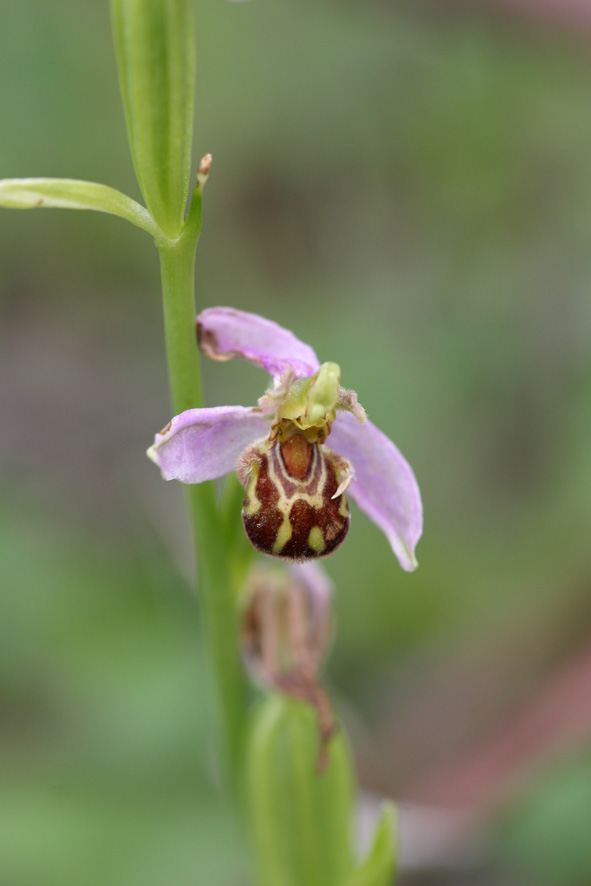
bee orchids
5 in total (that day)

and burnet moths
with five spots
crickets too
changing the soundscape
cranking up
the sensory experience
And then
two days later
there was the sunset experience
turns out
anyone’s garden
is indeed
anyone’s garden
on the 30th june
another artist, steve
recorded
Sunset over Salford wasteland
and invited others to watch
the evening spectacle
as he recorded the slow slip of the sun
sliding down the sky
and under the Salford horizon
we recorded
the shift in sunlight
on garden features and garden views
odd really,
we know this isn’t our garden
but we’ve very much
espoused anyone’s garden
and
kind of thought
that no one else had
caring for this ground in the way that we do
cherishing rubbish as relics
being entranced by the natural beauty of a brownfield
forever fascinated by processes occurring
has produced
protective impulses
reality is
anyone who chooses to
can
and do
use
anyone’s garden
Thursday, 30 June 2011
If you look the right way you can see the whole world is a garden…. (Frances Hodgson, The Secret Garden)
Garden: A garden is a planned space, usually outdoors, usually set aside for the display, cultivation, and enjoyment of plants and other forms of nature.
A garden can have aesthetic, functional, and recreational uses:
Cooperation with nature
· Plant cultivation
Observation of nature
· Bird- and insect-watching
· Reflection on the changing seasons
Relaxation
· Family dinners on the terrace
· Children playing in the garden
· Reading and relaxing in the hammock
· Maintaining the flowerbeds
· Pottering in the shed
· Basking in warm sunshine
· Escaping oppressive sunlight and heat
Growing useful produce
· Flowers to cut and bring inside for indoor beauty
· Fresh herbs and vegetables for cooking
All from Wikipedia (Accessed June 2011)
A garden as a planned space.
How much is the space of Anyone’s Garden ‘planned’? At one time the buildings that were there were planned, laid out, and built, and, in some places, the plants follow and reflect the lines of the building plan even today. So, unwittingly, the builders were also garden designers.

A garden as set aside.
‘Set aside’ can be used to have positive or negative connotations - it can mean to discard or alternatively, to save. The term was much used a few years back when it was also used to describe a process of reducing agricultural production that was introduced, and later abolished by the EU. So ‘set aside’ can have connotations of ‘protected’ and ‘conserved’ or of ‘cast off’ and ‘abandoned’. Anyone’s Garden is set-aside mainly in the sense of cast off and abandoned. But it’s set aside status has produced species that people like to protect, such as orchids: Dactylorhiza sp.

A garden for us
When we sit in our garden we cooperate with nature by allowing the plants to grow – this is a kind of passive cultivation.

We observe any nature (birds, insects) that we find
We reflect on the changing seasons and we have really experienced what it is like to sit in a garden in a freezing February afternoon twilight.
But mainly, we use Anyone’s Garden to relax, not by having a family dinner on our terrace, but by arriving harassed and stressed by our week and particularly by the trials of the particular day, and slowly unwinding as we put out our chairs, and settle with flask, cake and chat.

Sometimes we read and relax. We don’t have a shed to potter in but we do bask in warm sunshine. When the sunlight and heat is oppressive we have no escape but to go home. We don’t grow useful produce. And we don’t display the flowers, they display themselves whether or not we are there and we can take no credit for them.

The Helleborine (?)
Each time we visited anyone’s garden we took photos and resisted the urge to ‘garden’ by removing the Dandelion.


However, as April ended, we discovered one week, its blackened and shrivelled remains – presumably due to a late frost (although it had survived a bitterly cold winter).

This was the last of our Helleborine (or perhaps it may have been an orchid…)

The revisited and now familiar elements
Each visit, we find we become more attuned to the minutiae of the display of human and natural elements – this week, the electric kettle that was a feature in the south western quarter of the garden, had been smashed

… a brick in its broken centre.
Other constant features, like the mattresses, trainers, and the patterns of broken glass and pottery scattered in particular areas, are also recorded in our heads (as well as digitally).


So familiar are we with anyone’s garden that we are sure that we’d notice if these changed very much.
first week of june
Saturday, 28 May 2011
Anyone’s garden path(s)
18th May
Sitting
being here
loving it

contemplation
reflexion
coffee and chat
just casual
like you would in anyone’s garden
passing the time of day
in an enjoyable way
Hello, excuse me – please - can we take a photo of you? Our friends in Bolivia don’t believe me when I say “English people will sit anywhere to get a bit of sunshine”
we smiled
he took our picture
slightly tickled that we were having our picture taken
it didn’t even cross our minds to take one of them
until
they were over there
a consequence of relaxing
is
relaxing

Anyone’s garden is looking lovely
this is her view

and this is mine

ox-eye daisies
framing
features

creatures
feature
in them


ox-eyes Leucanthemum vulgare
bending in the breeze
we take a stroll

she like this garden
because she can walk
on hard surface sealants
a void of flower life
avoiding flower life

up a garden path
fringed with
crunchy cushion moss

to discover
a revered species

orchids


not uncommon
on sites like this
anyone’s garden
can harbour
surprises
the good
and the
so called bad
but not by us

one to watch
not to touch
according to the Apple Inc Dictionary (version 2.0.3.), bad has 8 meanings.
can a plant be bad?
is a plant simply ‘being’
is the term ‘bad’ ascribed because of preconceived value judgments?
bad |bad| adjective ( worse |wərs|; worst |wərst|)
- of poor quality; inferior or defective
- unpleasant or unwelcome; unsatisfactory or unfortunate; (of an unwelcome thing) serious; severe, unfavorable; adverse; harmful; not suitable
- (of food) decayed; putrid; (of the atmosphere) polluted; unhealthy: bad air.
- (of parts of the body) injured, diseased, or causing pain: a bad back. [as complement] (of a person) unwell: I feel bad.
- [as complement ] regretful, guilty, or ashamed about something
- morally depraved; wicked; naughty; badly behaved
- worthless; not valid
- informal good; excellent: they want the baddest, best-looking Corvette there is.
With regard to the nature in Anyone’s garden
our perception is that nothing is bad
(there’s no room for the word ugly in anyone’s garden either)
hours
days
years
spent
studying and observing
botanikos
yet still
first sightings occur

fox-and-cubs - Hieracium aurantiacum

Anyone’s garden
is flourishing

and there are signs of mammal movement

the wonders never cease